
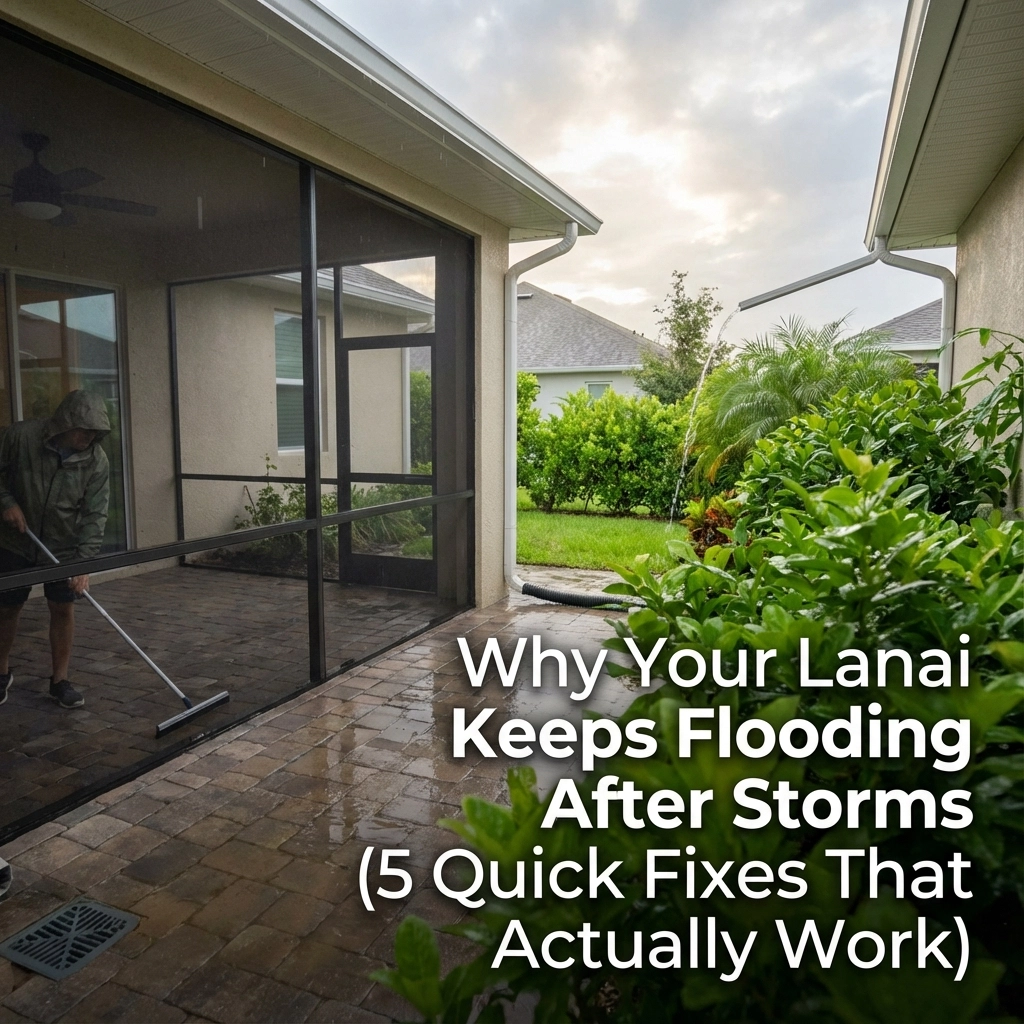
Florida homeowners know the frustration all too well – you've just weathered another intense storm, and now your beautiful lanai looks more like a swimming pool than an outdoor living space. If your lanai keeps flooding after every heavy rain, you're not alone. This common problem affects thousands of Tampa Bay area properties, but the good news is that most flooding issues can be resolved with the right approach.
Understanding why your lanai floods is the first step toward finding a permanent solution. Most flooding problems stem from poor water management around your home's foundation, inadequate drainage systems, or simple maintenance oversights that allow water to accumulate where it shouldn't.
What Causes Lanai Flooding After Storms?
Poor Downspout and Gutter Management
The most frequent culprit behind lanai flooding is improper roof water management. When gutters overflow or downspouts simply dump water directly onto the ground near your lanai, that water has nowhere to go except under and around your outdoor living space. During Florida's intense summer storms, this can mean hundreds of gallons of water flowing directly toward your foundation.
Many homes have downspout extensions that barely extend a foot or two from the house – essentially useless during heavy rainfall. Without proper drainage pathways, roof water becomes ground water that pools around your lanai's foundation.
Blocked or Inadequate Storm Drainage Systems
Even if your property has storm drains or catch basins, they're only effective when properly maintained. Drainage Professional regularly encounters systems packed with leaves, debris, and sediment that prevent water from flowing away during storms. When these systems fail, water backs up and seeks the path of least resistance – often straight into your lanai.
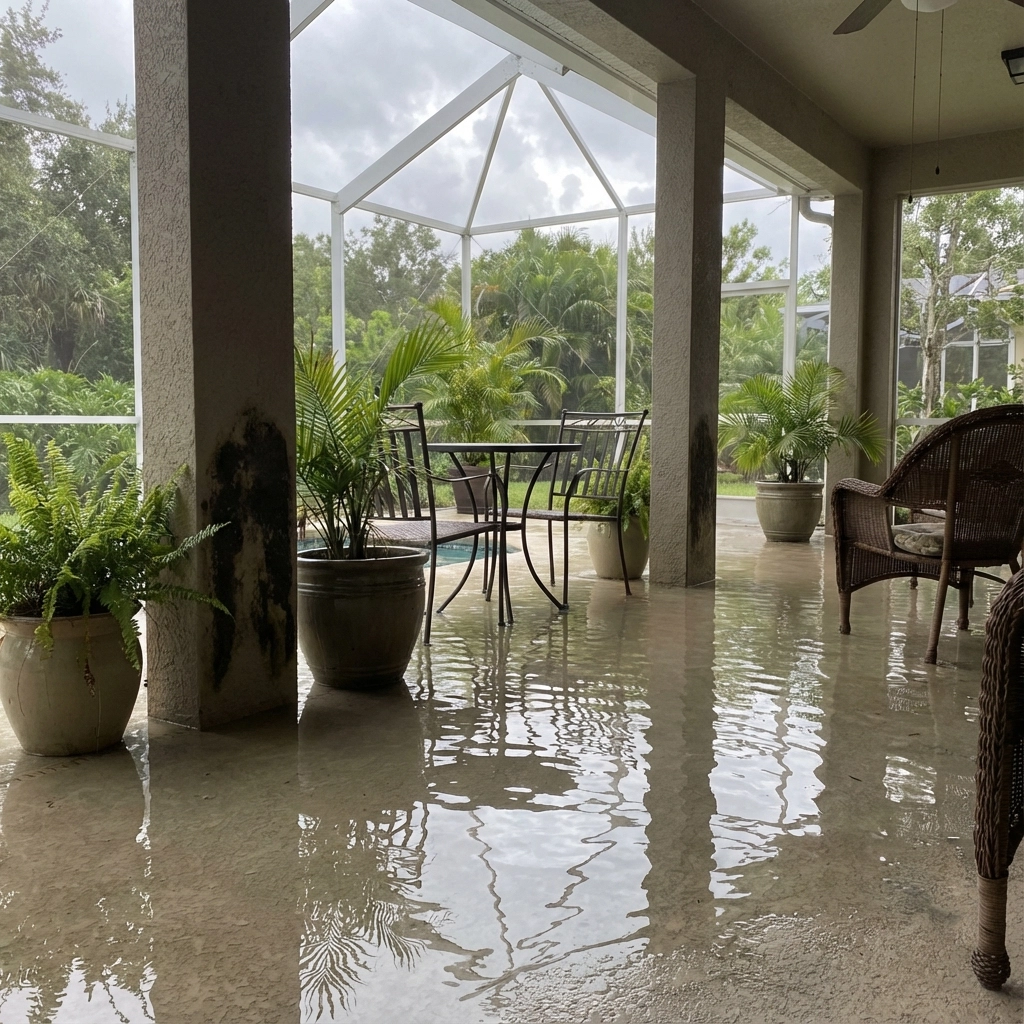
Grading and Slope Issues
Your lanai should be surrounded by ground that slopes away from the structure, directing water toward designated drainage areas. Unfortunately, many properties have grading that actually channels water toward the home. This can happen due to:
• Settling over time that creates depressions near the foundation
• Landscaping changes that alter natural water flow patterns
• Concrete installation that doesn't account for proper drainage
• Erosion that creates channels leading toward your lanai
Inadequate Underground Drainage Infrastructure
Many lanais were built without considering long-term water management. Without French drains, underground piping systems, or proper catch basins, even moderate rainfall can overwhelm surface drainage and cause flooding problems.
5 Quick Fixes That Actually Work
1. Extend Your Downspouts the Right Way
Replace basic splash blocks with underground drainage systems or extended downspout pipes that carry water at least 6-10 feet away from your lanai. For the most effective solution, consider:
• Installing underground PVC piping that connects to storm drains • Using flexible downspout extensions during storm season • Adding pop-up drainage emitters that disperse water over larger areas • Ensuring downspouts discharge into graded swales that direct water away from your home
This single improvement can eliminate 60-70% of lanai flooding issues, especially when combined with proper gutter maintenance.
2. Install a Strategic Catch Basin System
A well-placed catch basin can intercept water before it reaches your lanai and channel it safely away through underground piping. The key is strategic placement – typically where water naturally collects or flows during storms.
Drainage Professional often installs catch basins in areas where: • Multiple water sources converge (roof runoff, patio drainage, landscape water) • Natural low points collect water during storms • Concrete meets landscape areas • Water flows from neighboring properties
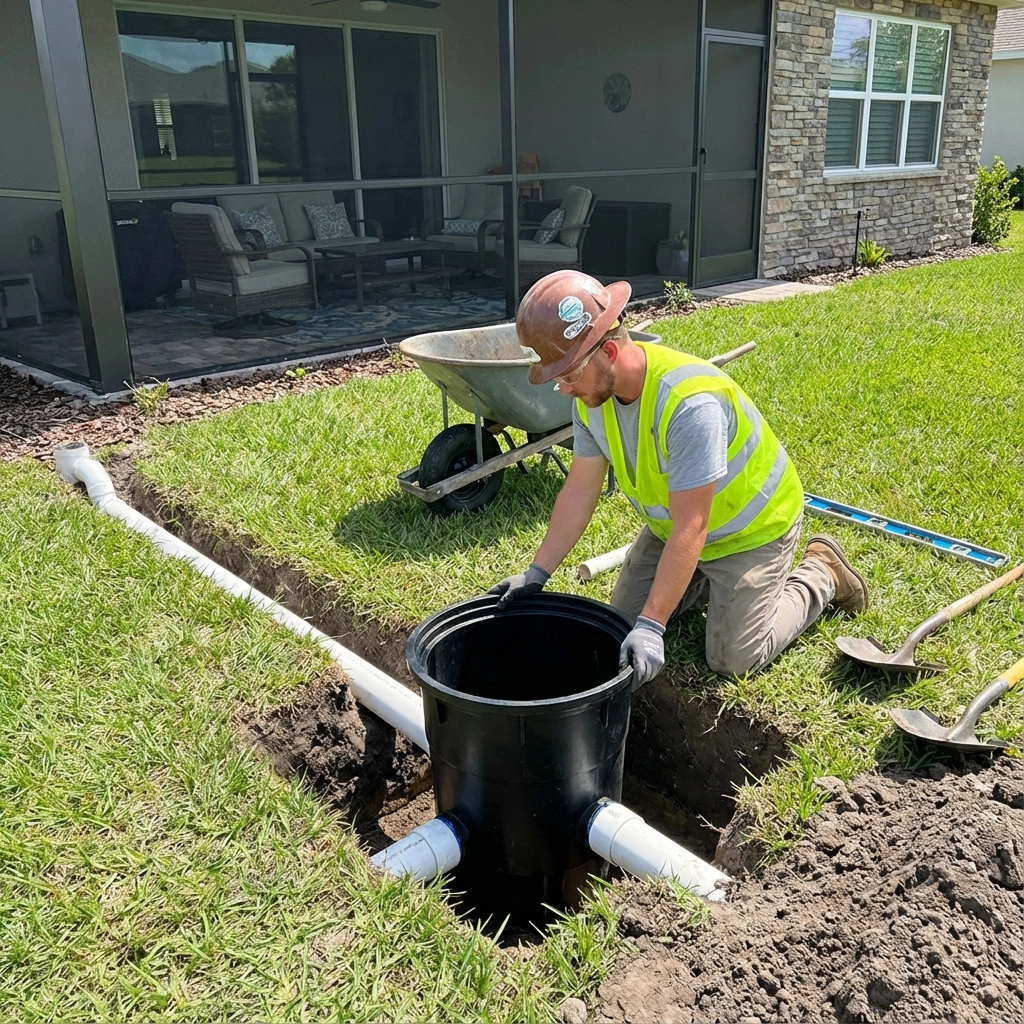
A properly installed catch basin system with underground piping to storm drains or designated discharge areas provides reliable, long-term protection against lanai flooding.
3. Clear and Maintain Existing Drainage Systems
Before installing new drainage infrastructure, ensure your existing systems are functioning properly. This maintenance should happen before every storm season:
• Remove debris from storm drain grates and inlet screens • Clear leaves and sediment from catch basins • Check that underground pipes aren't clogged or damaged • Verify that drainage discharge points are clear and functioning
Regular maintenance prevents expensive flooding damage and ensures your drainage systems work when you need them most.
4. Correct Grading Around Your Lanai
Proper grading creates a subtle slope that directs water away from your lanai toward designated drainage areas. This might involve:
• Adding soil to create positive drainage away from your foundation • Creating shallow channels (swales) that guide water toward storm drains • Installing drainage trenches filled with gravel for underground water movement • Adjusting landscaping that blocks natural water flow patterns
The goal is ensuring water flows away from your lanai rather than pooling around the foundation. Even a 2-3% slope can make a dramatic difference in preventing flooding.
5. Add Protective Lanai Enclosures and Drainage Features
For lanais that experience persistent flooding, combining protective enclosures with enhanced drainage creates the most comprehensive solution:
• Screen enclosures that reduce direct rain exposure while allowing airflow • Lanai drains installed at low points to capture and remove water • Decorative channel drains (deco drain systems) that handle water while maintaining aesthetic appeal • Raised thresholds that prevent water intrusion during moderate flooding
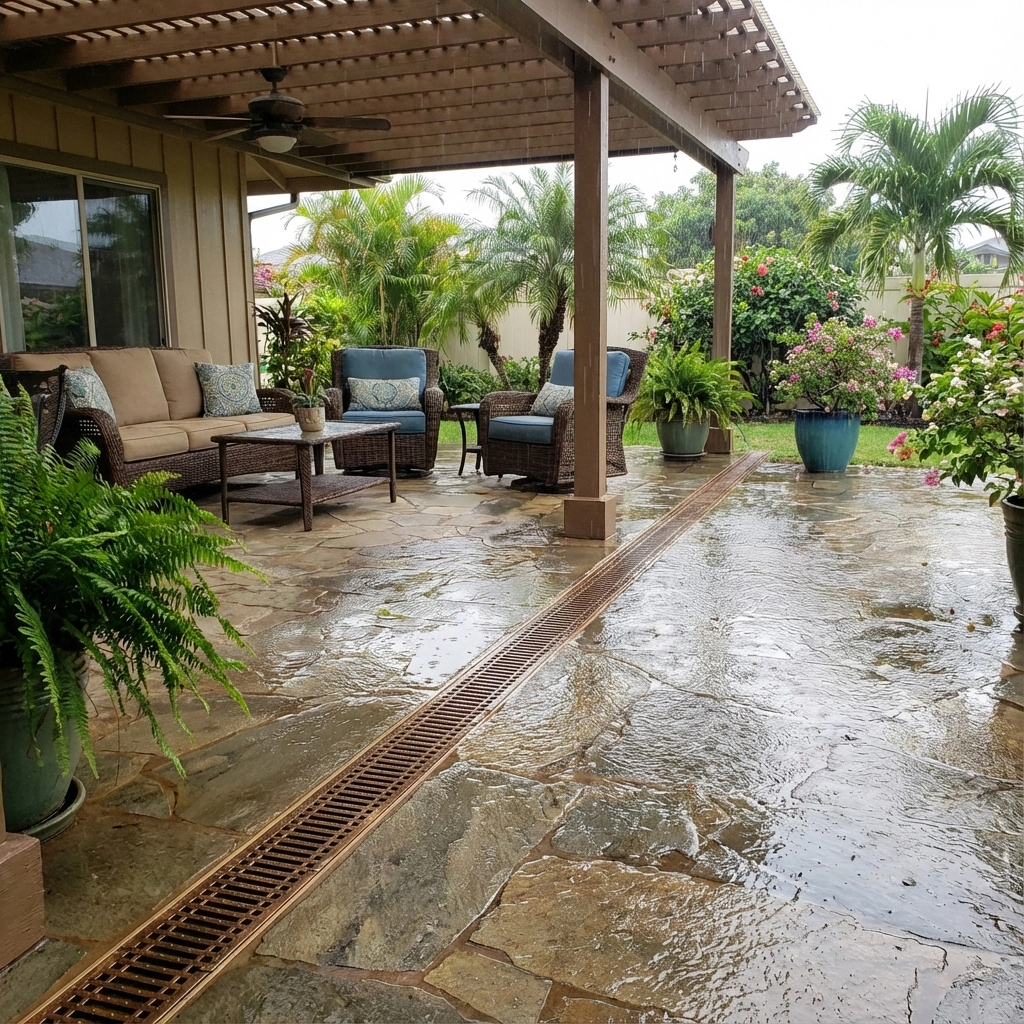
These solutions work particularly well for lanais with concrete floors that don't allow natural water absorption.
When to Call Drainage Professionals
While these quick fixes can resolve many lanai flooding issues, some situations require professional drainage expertise:
• Flooding that returns despite multiple DIY attempts
• Water intrusion that affects your home's interior spaces
• Complex grading issues involving multiple properties or easements
• Underground drainage problems requiring excavation
• Commercial drainage needs for larger properties or developments
Drainage Professional has helped hundreds of Tampa Bay homeowners resolve persistent flooding issues with comprehensive drainage solutions tailored to Florida's unique climate and soil conditions.
Protecting Your Investment
Your lanai represents a significant investment in outdoor living space and property value. Persistent flooding not only makes the space unusable during storm season but can lead to structural damage, mold growth, and expensive repairs over time.
Taking action now with proper drainage solutions protects both your immediate comfort and long-term property value. Most homeowners find that investing in professional drainage assessment and implementation pays for itself by preventing costly water damage and extending the life of outdoor structures.
Take Action Before the Next Storm Season
Don't wait for the next major storm to address your lanai flooding problems. Florida's weather patterns mean that effective drainage isn't just convenient – it's essential for protecting your home and maintaining your quality of life.
Whether you tackle these fixes yourself or need professional help with more complex drainage challenges, Drainage Professional is here to help Tampa Bay area homeowners create effective, long-lasting solutions. Our drainage experts understand the unique challenges of Florida properties and can design systems that handle everything from daily afternoon storms to major weather events.
Contact us today for a comprehensive drainage assessment and discover how proper water management can transform your lanai from a flooding problem into the outdoor oasis it was meant to be.
Sources: Professional drainage expertise and field experience with Tampa Bay area properties. For specific technical guidance, consult with certified drainage contractors familiar with local building codes and environmental conditions.


